
A Tree is a Tree
How Social Expectations Shape the Way We Show Up in the World
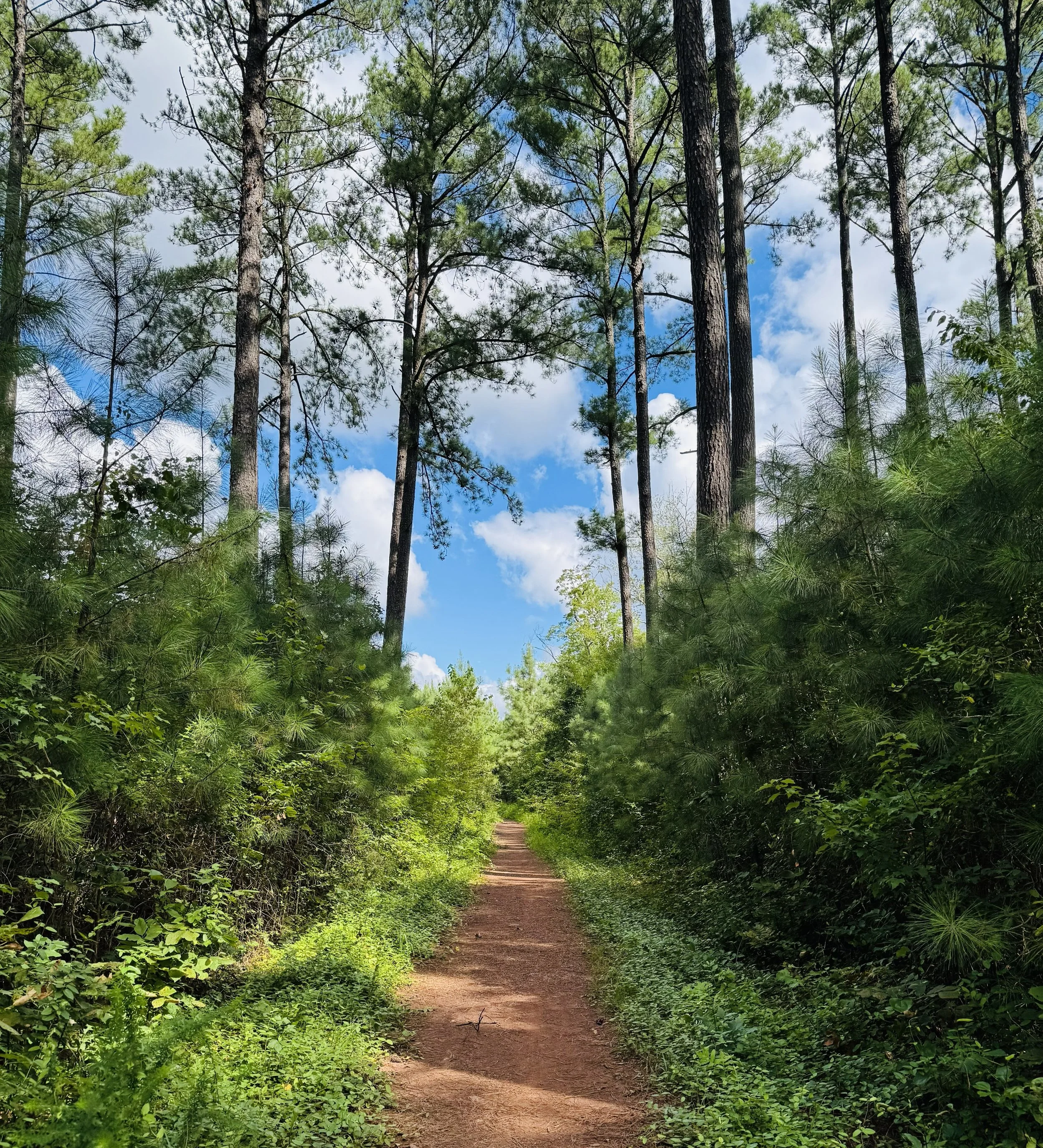
Photo by Shanna Haight, Conway Robinson State Forest
Some time ago, I traveled to another state to visit a friend for about a week. Most evenings we ventured outdoors for a walk around dusk after we’d finished dinner, wrapping up well after dark. I really enjoyed our walks and seeing the town, and I appreciated the movement in my body and the digestive benefit, as well as the company as we meandered along paved streets and sidewalks.
On one of these lovely evening walks, we passed a home with shrubbery that was a bit wild and untamed, reaching into the sidewalk space and necessitating stepping to the side to skirt around it. This was quite a stark contrast to all the neatly manicured properties we’d passed on our walk to that point, and I felt a sting of irritation, accompanied by the thought they need to do a better job of taking care of their yard.
Because I have an active practice of awareness and inquiry, I didn’t simply notice this and dismiss it… instead, I noticed and then I asked myself why I’d reacted that way.
I spend a lot of time outdoors—as much as I can, in fact—immersed in nature. I traverse and explore with frequency mountain and forest paths that are full of roots and stones underfoot, and ample plant life attempting to reclaim the trail space and absorb it back into the forest ecosystem. As a result, I am often brushing against plants—even thorned plants—without a second thought, aside from admiring their wild beauty.
I adjust myself to cause as little disturbance as possible to them—it is their domain, after all, not mine. As a human, I am sharing their space, not the other way around.
And yet I was irritated, even if only mildly, by having to step around it on a sidewalk because it hadn’t been “maintained”. Because it hadn’t been kept inside its designated box.
Because it was reaching for more in a space where others had already designated what was enough.
Immediately aware of the dissonance between that reaction and how I am present in a forest—the stark incongruence—I wondered how it was possible that I’d had such an immediate aversion to the overgrowth.
Why would the exact same thing inspire annoyance in one setting and respect and admiration in another?
Be acceptable in one setting and unacceptable in another?
I knew as I explored these questions that they were getting at something much deeper and larger than plant life… wasn’t it really something that happens often in our lives?
I was intolerant in town because there is an internalized expectation that in-town plant life is controlled and expected to conform. Which meant that there was a disconnect between what I expected simply based on setting… the plants themselves didn’t change, but my expectation for them did because of where they were.
Is this really any different from expecting a person to behave differently in different settings?
It’s okay for a child to be talkative and active at home, but not at school or in a restaurant where they must have a sudden talent for being still and quiet.
It’s not okay for a man to make crude, lewd, demeaning sexual jokes about women to his wife or girlfriend or mother, but when they’re with their friends, the jokes are encouraged and laughed at.
It’s okay for someone to be gay at home, but they’re supposed to act as if they are not out in public.
It’s okay to want a work-life balance and talk about that at home, but it’s not okay to ask for that at work or turn down work that would threaten that balance.
And on and on… the list of examples of these double standards is inexhaustible.
We function in a society where everything and everyone is expected to be different when the setting changes… but a tree is a tree, a child is a child, a person loves who they love. The setting doesn’t change who we are fundamentally.
Though at the same time, how can we know who we are when we are constantly adjusting ourselves based on where we are? How can we find peace and resilience, confidence and contentment, balance and joy, when changing a setting means no longer being ourselves… no longer moving in accordance with our truest, deepest values?
We can’t.
Let me repeat that: We can’t.
To cultivate these qualities that we are all, on some level, searching for, we have to be authentically ourselves regardless of the setting, in every varied and beautiful expression of ourselves, even at the level of our thoughts.
There was an incongruence between my thoughts on that walk and what I actually value: true, authentic expression, whether that means plant, animal, or human. But finding these inconsistencies doesn’t mean we’re doing something wrong. In fact, it means we’re doing something right. And what we do next matters even more than what we discovered.
My realization opened a doorway for me to spread my awareness to notice other ways these double standards showed up in my life and begin to work on reconciling them so I can live an authentic expression of who I am. I could have shrugged it off and ignored it, and that dissonance would have continued to exist within me, detracting from the way I want to exist in the world, detracting from my cultivation of peace, contentment and joy.
Is this easy? No. Is it comfortable? Also no. Is there a finish line? Still no.
What it can do is much greater, however, because it can positively and significantly impact the way you experience and move through life, helping you to bring more of those seemingly elusive qualities into your everyday.